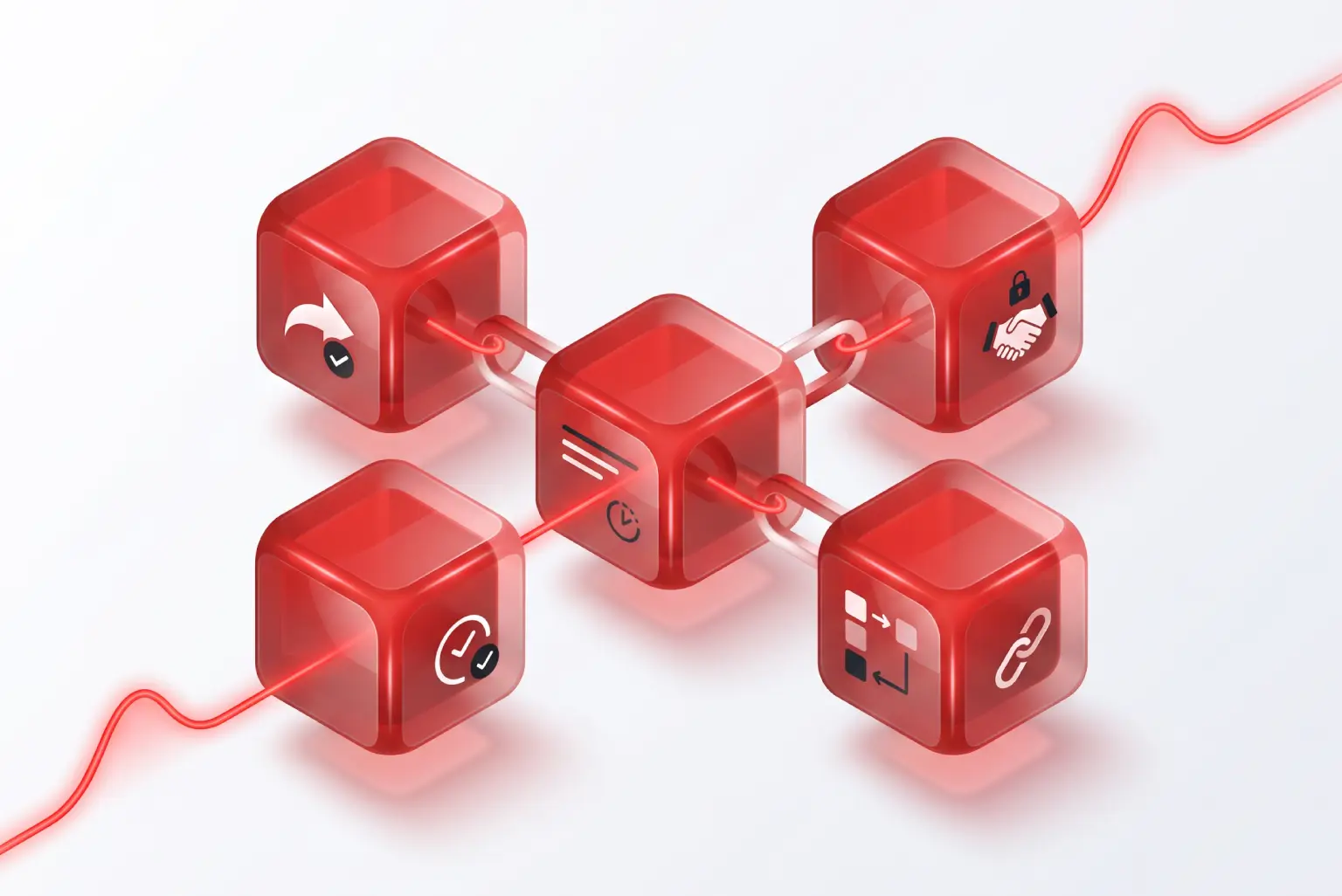
Organizations like IBM and Amazon Web Services describe blockchain in similar terms: a shared, tamper-resistant ledger built specifically so that once something is recorded, it's extremely difficult to secretly change.
How it actually works
Three ideas sit at the core of blockchain technology.
Transactions are grouped into "blocks." Every time value moves, say, someone sends crypto to someone else, that transaction gets recorded. A batch of recent transactions is bundled together into a block.
Blocks are linked into a chain. Each new block contains a reference back to the block before it, forming an unbroken, chronological chain. This is where the name "blockchain" comes from. Because each block is tied to the one before it, altering an old transaction would mean rewriting every block that came after it, which is something the network is designed to make practically impossible.
The ledger is distributed, not centralized. Instead of living on one company's server, the ledger is copied across many independent computers, often called "nodes." Before a new transaction is added, the network has to agree it's valid, a process known as consensus. Because so many computers hold matching copies and check each other's work, no single person or organization can quietly edit the records or spend funds that aren't theirs.
Together, these features are why blockchain is often described as immutable, meaning hard to alter after the fact, and decentralized, meaning not controlled by one central authority.
Public vs. private blockchains
Not all blockchains work the same way.
Public blockchains, like the ones Bitcoin and Ethereum run on, are open to anyone. Anyone with an internet connection can view the transaction history, though they can't edit it.
Private blockchains are more restricted, maintained by a single company or a select group, often used internally by businesses rather than as public, open networks.
Most cryptocurrencies you'll come across, including the ones you can explore in the Aircash app, run on public blockchains.
Why blockchain matters beyond crypto
While blockchain first became widely known through Bitcoin, its potential uses go further. Businesses and researchers have explored blockchain for things like tracking goods through a supply chain, verifying digital identity, and settling financial transactions faster and with fewer intermediaries.
Cryptocurrency remains its most established and widely used application today, but it's worth knowing that the underlying technology isn't limited to money alone.
This article is for educational purposes only and does not constitute financial advice. Cryptocurrency investments carry risk, including the risk of loss.
 August 31, 2026With Aircash, there’s no need to wait until your holiday is over - you can take care of your bills and other obligations wherever you are.
 August 25, 2026Slovenia beyond the postcard: a journey that only begins after Bled
 August 18, 2026Bills don't go on holiday, but you can
 August 4, 2026Stress-free ferry: why more travellers are buying tickets in advance
 July 29, 2026Ferry and bus wait for no one, getting a ticket shouldn't slow you down
 July 28, 2026Croatian highways in summer: a little trick that saves hours of waiting
 July 21, 2026Parking during summer in Croatia? A challenge almost every driver faces
 June 29, 2026Found parking? Don't lose it over coins or parking without pocket change
- May 6, 2025The Right to Privacy – A Fundamental Human Right in the Digital Age
- April 9, 2025How to easily send money from Germany to Croatia with the Aircash app